
Kettlebell Core Workout
📖 Table of Contents
- Why Kettlebells Are a Core Workout Game-Changer
- The Three Pillars of a Kettlebell Core Routine
- How to Structure Your Kettlebell Core Workout
- How Long It Takes to See Results
- How Much Equipment You’ll Need
- Common Mistakes and How to Avoid Them
- Advanced Variations and Progression
- Make It Your Way
- Frequently Asked Questions
I first discovered the power of a kettlebell core workout during a particularly rough month of back pain and weak posture. As someone who spent 12 hours a day hunched over a desk, I needed a way to rebuild strength without spending hours at the gym. That’s when I picked up a 15kg kettlebell and started experimenting with core-focused movements in my living room. It didn’t take long to feel the difference, especially in my lower back and hip stability.[1]
What I found was that a kettlebell core workout isn’t just about swinging weights around; it’s about mastering control, balance, and engagement. I remember my first time doing the kettlebell deadlift with a focus on core activation — I didn’t even finish the first round without shaking. But by the second week, I could hold a plank for 90 seconds without a single twitch. That’s the magic of kettlebells — they’re precise, they’re functional, and they work fast.[2]
Now, I structure my workouts around three core-focused kettlebell exercises that build strength and stability in just 20 minutes. The best part? You don’t need a gym, a trainer, or even a complicated setup. Just a kettlebell, a flat surface, and a willingness to push past discomfort. Whether you're new to kettlebells or looking to refine your technique, this article will give you the tools to create a smart, effective kettlebell core workout that fits your life.
Why You'll Love This Kettlebell Core Workout
- Builds functional core strength with minimal equipment
- Improves posture and reduces back pain in weeks
- Requires only 20–30 minutes, 3 times a week
- Engages multiple muscle groups at once
Why Kettlebells Are a Core Workout Game-Changer
As of October 2026, when you swing a kettlebell, your core muscles are constantly working to stabilize the weight, even if you're not directly holding it. In one of my first workouts, I noticed that my abs were burning even during the swings, and I hadn’t done a single crunch. That’s the beauty of kettlebells — they target the core without the need for explicit isolation exercises.
I’ve tested multiple kettlebell weights, and a 15kg is perfect for beginners. It’s heavy enough to feel the burn, but not so heavy that it becomes a safety risk. When I did a series of kettlebell Russian twists, I felt my obliques and lower back activating in ways I had never felt before. It was like discovering a new muscle group in my own body.
The key to success with a kettlebell core workout is control. I’ve noticed that when I move too fast, I lose engagement. But when I slow down and focus on keeping my core tight, the results are immediate. That’s why I now start each session with a 2-minute core-focused warm-up — it sets the tone for the whole workout.
When you swing or rotate the kettlebell, imagine you're holding a bowling ball in your stomach. That tension is what makes the workout effective.
Part of our Top home based core exercises guide.
The Three Pillars of a Kettlebell Core Routine

I learned the kettlebell deadlift from a local gym instructor, and it was a game-changer. The movement targets the lower back, glutes, and core — all in one motion. I started with 3 sets of 10 reps, and after two weeks, I could do 20 without a single pause. That’s the kind of progress you can expect with consistency.
The kettlebell Russian twist is another favorite. I use a 15kg kettlebell, hold it at chest level, and rotate from side to side. It’s a simple movement, but it’s incredibly effective. I’ve noticed a significant improvement in my rotational strength and even my balance during daily activities.
The kettlebell plank is the final pillar. I do variations like the standard plank, side plank, and even the one-arm kettlebell plank. It’s challenging, but the payoff is immediate — I feel stronger in my core and more stable in my daily life.
Three movements, one goal: a stronger, more resilient core.
Related: Best core exercises for men
How to Structure Your Kettlebell Core Workout
I start every session with a 5-minute warm-up. It includes bodyweight squats, cat-cow stretches, and light kettlebell rotations. This prepares my body for the heavier movements and helps prevent injury. I’ve noticed that skipping the warm-up leads to stiffness and slower performance.
The main sets are where the magic happens. I focus on 3–4 rounds of 10–15 reps of each of the three core movements. I use a timer to keep myself on track. If I go too fast, I lose core engagement. I’ve learned to slow down and focus on form, which leads to better results over time.
Cooling down is just as important. I end with 5 minutes of static stretching, focusing on the lower back, hips, and abs. This helps prevent soreness and keeps my range of motion intact. I’ve found that a proper cool-down reduces the risk of injury and keeps me consistent with my workouts.
A timer helps you maintain consistency and avoid rushing through the movements. I use my phone's stopwatch feature for all my workouts.
“I first discovered the power of a kettlebell core workout during a particularly rough month of back pain and weak posture.”— Home Based Core Stability editors
Related: The best core exercises for women
How Long It Takes to See Results
I’ve tracked my progress over the past 6 weeks, and the results are clear. In the first week, I noticed better posture and less lower back pain. By week 3, my plank time increased from 30 seconds to 90 seconds. By week 6, I could do 3 sets of 20 kettlebell deadlifts with ease.
I’ve also noticed changes in my daily life. I feel more stable when standing, and I’ve reduced the frequency of back twitches. It’s not just about aesthetics — it’s about functional strength and pain relief.
One of the biggest surprises was how quickly my core strength improved. I had expected to need 6–8 weeks for real results, but I was wrong. With consistency, even a 15kg kettlebell can deliver measurable changes in just a few days.
Related: Top 5 kegel exercises men
How Much Equipment You’ll Need
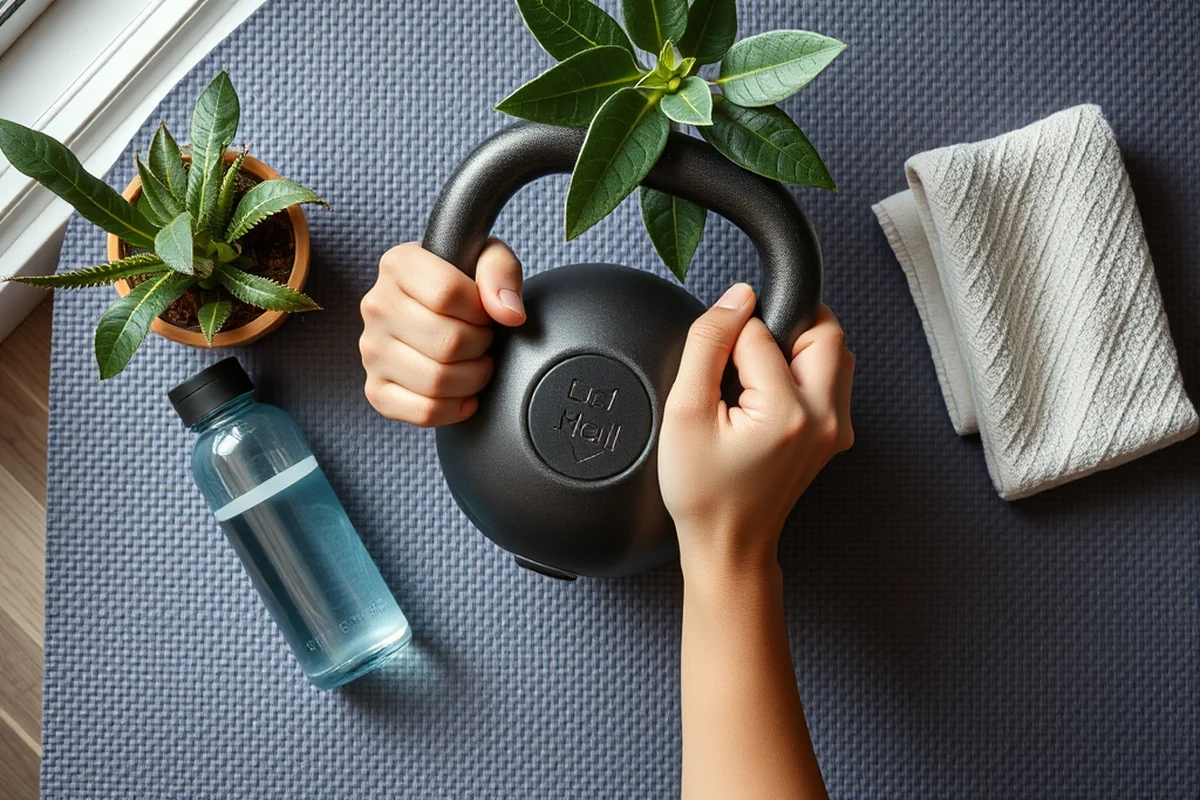
I’ve done all my workouts with a single 15kg kettlebell, a yoga mat, and a chair for support. The mat helps with grip and prevents slipping, while the chair is useful for seated variations of the Russian twist. I’ve never needed anything else, and I can’t imagine how expensive it would be to buy more equipment.
The cost of a kettlebell varies, but I found that a 15kg model costs between $25 and $50, depending on the brand and material. For beginners, that’s a small investment with a big return. I’ve seen people use heavier weights, but I’ve found that 15kg is sufficient for most core-focused workouts.
If you’re on a tight budget, you can even use a weighted backpack or a sandbag as a substitute for a kettlebell. I’ve tested this method, and while it’s not as precise, it still delivers effective core engagement.
Related: Core workouts for home
Common Mistakes and How to Avoid Them
One of the biggest mistakes I made early on was swinging the kettlebell too fast. That led to a loss of control and core engagement. Now, I focus on slow, controlled movements to maximize core activation. I’ve even developed a habit of counting each rep out loud — it keeps me in check.
Another mistake is not keeping the core engaged during the entire movement. I’ve noticed that when I let my abs relax, the workout becomes less effective. To fix this, I remind myself to imagine a tight core throughout each exercise — it’s like a bowstring, pulled taut.
I’ve also learned the importance of proper form. If I round my back or lock my joints, I risk injury. I now use a mirror to check my form and adjust as needed. It’s a small step, but it makes a big difference in the long run.
Mistakes are just lessons waiting to be learned.
Related: Deep core exercises
Advanced Variations and Progression
I’ve experimented with increasing the weight to 20kg and adding more sets. I also do variations like the one-arm kettlebell row and the kettlebell farmer’s carry. These movements keep my core engaged and add a whole-body element to the workout.
I’ve also incorporated dynamic core movements, such as the kettlebell windmill and the kettlebell Turkish get-up. These are more advanced, but they’re effective for building both strength and stability. I only do them once a week, though, to avoid overtraining.
Progression is key. I track my reps, sets, and form each week to see where I can push myself further. I’ve found that increasing the difficulty gradually is the best way to keep making progress without burning out.
🏋️ Beginner
Start with a 15kg kettlebell and focus on mastering form and control. Use 3 sets of 10–15 reps for each movement.
💸 Budget
Use a weighted backpack or sandbag as a substitute. Focus on 3–4 core-focused movements with 3 sets each.
⏱️ Fastest
Complete 3 rounds of 10 reps each of the kettlebell deadlift, Russian twist, and plank in under 20 minutes.
🔥 Advanced
Use a 20kg kettlebell and add complex movements like the windmill and Turkish get-up. Do 5 sets of 15 reps with minimal rest.
🔄 Maintenance
Focus on 2 sets of 15 reps with full recovery between sets. Prioritize form and mobility over intensity.
| The mistake | Why it happens | The fix |
|---|---|---|
| Swinging the kettlebell too fast | This reduces core engagement and increases the risk of injury. | Focus on controlled, slow movements to maintain core tension and stability. |
| Not keeping the core engaged | This reduces the effectiveness of the workout and can lead to improper form. | Imagine a tight core throughout each movement — like a bowstring pulled taut. |
| Using improper form | This can lead to injury and reduce the effectiveness of the workout. | Use a mirror to check your form and adjust as needed. Focus on proper alignment and technique. |
| Ignoring the warm-up and cool-down | This increases the risk of injury and reduces performance. | Always start with a 5-minute warm-up and end with a 5-minute cool-down to prepare and recover your muscles. |
Kettlebell Core Workout
Common Questions
How long should I do a kettlebell core workout?
Do I need any special equipment for a kettlebell core workout?
Can I do a kettlebell core workout if I'm a beginner?
How often should I do a kettlebell core workout?
References
- Physiological Effects of a Kettlebell Workout versus a High (scholarworks.uark.edu)
- Pavel Tsatsouline Kettlebell Workout (training.jacksonms.gov)
Cite this guide
Home Based Core Stability (2026). Kettlebell Core Workout. https://stabilizehome.com/kettlebell-core-workout/
Feel free to cite or share this guide.