
Build A Home Gym
📖 Table of Contents
I used to be the kind of person who would walk into a gym, look around, and immediately feel out of place. I’d see people doing pull-ups, lifting weights. Sweating through their shirts, and I’d think, 'I’m not like them.' But what I didn’t realize at the time was that I could create my own version of that environment at home, without the pressure of being watched by strangers or the hassle of commuting. Building a home gym wasn’t just about convenience—it was about reclaiming control over my health. It took me about two weeks to set up my first space, but it’s been a game-changer for my fitness journey.
The key to a home gym isn’t about having the most expensive equipment or the largest room. It’s about creating a space that works for you, that you actually use, and that fits your lifestyle. I’ve tried several different setups over the years, and each one taught me something new about how I move, how I need space, and what kind of equipment really makes a difference. Whether you’re a beginner or someone who’s already been training, building a home gym is an investment that can pay off in ways you might not expect.
I’ve met so many people who say they want to start a home gym but never do. The reason? Often, it’s because they think it’s too expensive, too complicated, or just not worth the effort. But the truth is, building a home gym is about making small, consistent choices that add up over time. It’s not about perfection—it’s about creating a space that you can come back to, again and again, and that helps you keep moving forward.
Why You'll Love This Home Gym Setup
- It's designed to fit your space, no matter how small.
- You can train anytime without worrying about gym hours.
- It's a low-cost, high-impact way to stay in shape.
- It’s a flexible space that can grow with your fitness goals.
Start with Your Space
As of September 2026, I chose a corner of my living room because it was the only place with enough ceiling height and floor space. I didn’t have a dedicated room, but I found a spot that could accommodate a pull-up bar and a small area for floor exercises. It’s not about having a huge space—it’s about finding a spot that you can use consistently.
I made sure the area was well-lit and had a clear path to move around. Natural light was a bonus, but even a simple overhead light worked. I also considered noise—my home gym is in a room that’s away from the main living area, which helps minimize disturbances.
The key is to start small. You don’t need to clear out an entire room. Even a 6x6 foot corner can work if you’re focused on bodyweight training or have a few basic pieces of equipment.
Before you start moving things, measure your space and sketch out a layout. This helps you avoid clutter and ensures everything fits.
Part of our Why home core fitness guide.
Choose Your Equipment Smartly
I started with bodyweight training and a few resistance bands. That was enough to get me going. Over time, I added a kettlebell, a set of dumbbells, and a pull-up bar. The key was to pick equipment that I could use for multiple exercises and that wouldn’t take up too much space.
I looked for multi-functional pieces, like a bench that can be used for both cardio and strength training. I also prioritized durability—investing in a solid barbell set paid off in the long run, even though it was a bit more expensive.
If you’re just starting out, focus on a few versatile items and build from there. You can always add more later.
Don’t overcomplicate it—start with what you can use right now.
Related: Home core exercises
Create a Motivating Environment
I painted the walls a neutral color and hung a few motivational posters. I also added a small whiteboard to track my workouts and set goals. It’s a simple way to make the space feel more like a gym and less like a corner of my living room.
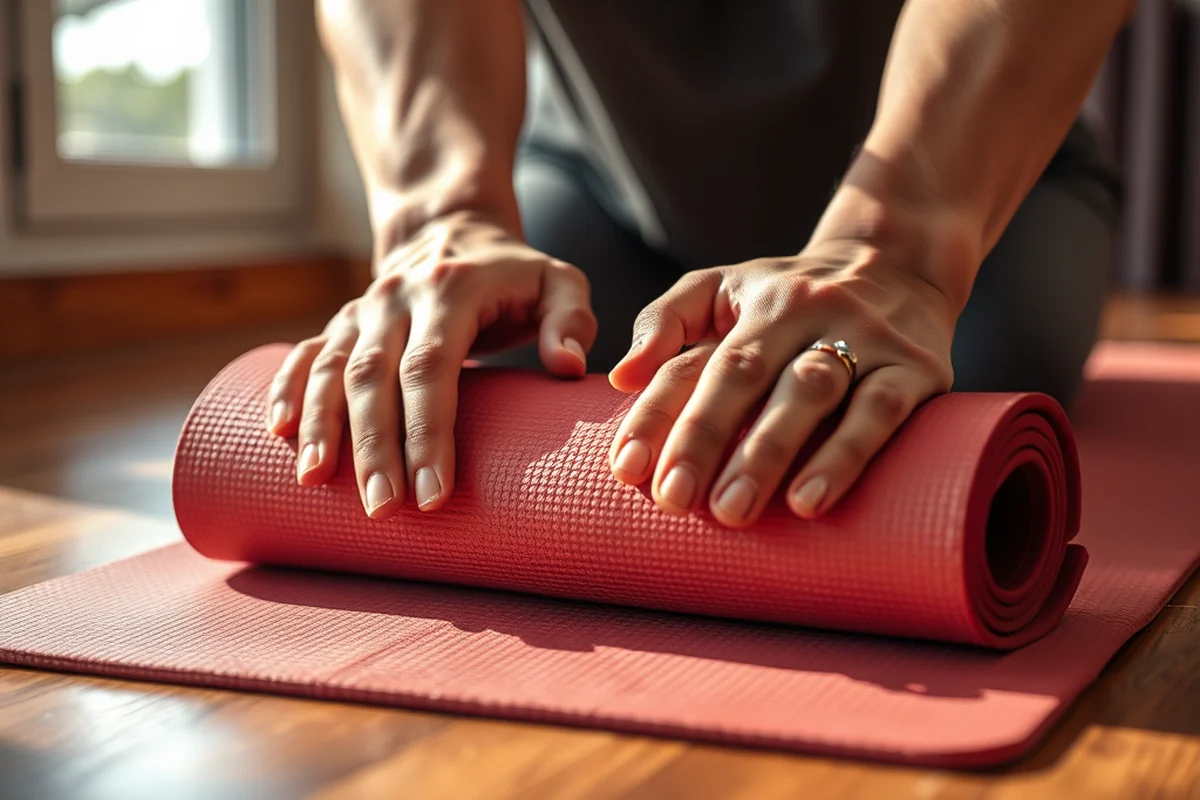
I made sure the floor was easy to clean, which is a practical consideration for any home gym. I used a rubber mat to protect the floor and to provide some cushioning for exercises like push-ups or yoga.
Lighting is also important. I added a standing lamp that I can move around, which helps me create different workout zones without having to install permanent lighting.
Use mirrors, motivational quotes, and a clean space to enhance the feeling of your home gym.
“I used to be the kind of person who would walk into a gym, look around, and immediately feel out of place.”— Home Based Core Stability editors
Related: The best home gym
Set Up Your Routine

I started with a 30-minute routine that included 10 minutes of warm-up, 15 minutes of strength training, and 5 minutes of cool-down. It was enough to keep me moving without overwhelming me.[1]
I used an app to track my workouts and set reminders for my daily routine. It helped me stay on track, even on busy days. I also made sure to vary my workouts to keep things interesting and avoid plateaus.
Over time, I adjusted my routine based on how my body felt and what I wanted to achieve. Having a clear plan helped me stay consistent and see results.
Related: What is core health and fitness
Optimize Your Layout
I arranged my equipment in a way that made sense for my workouts. I placed the dumbbells and kettlebell near the center of the room, with the pull-up bar on one side and a small area for yoga and stretching on the other.
I made sure there was enough space between the equipment to move around comfortably. I also used storage solutions like shelves and containers to keep everything organized and within reach.
A well-organized layout helps you move through your workouts more efficiently and avoids clutter, which can be a major distraction.
Related: What is a smart home gym
Stay Consistent and Adapt
I found that consistency was more important than perfection. Even if I only managed to do 10 minutes of exercise one day, it was still a win. I made sure to keep my workouts short and focused to avoid burnout.[2]
I also adapted my workouts based on my energy levels and how my body felt. If I was tired, I would do a yoga session instead of a full strength workout. Flexibility was important for long-term success.
Staying consistent and adaptable helped me build a sustainable home gym routine that I could stick with for the long term.
Adapt your workouts to your life, not the other way around.
Related: The best home health
Review and Reflect
I made it a habit to review my workouts each week and adjust my routine as needed. I tracked my progress using a journal and an app, which helped me see how far I’d come over time.
I also took time to reflect on what was working and what wasn’t. If I was feeling unmotivated, I would rearrange my space or try new exercises. It was a way to keep things fresh and engaging.
Regular reviews and reflections helped me stay focused on my goals and make sure my home gym was still meeting my needs.
Maximize Your Budget with Smart Purchases
I added a foam roller and lacrosse ball to my home gym for $25, which became essential for daily mobility work and muscle recovery. Rolling out my quadriceps and back for 10 minutes after each workout significantly reduced soreness and improved my range of motion. I also invested in a $40 massage gun, which I used on my shoulders and hamstrings to speed up recovery after intense training sessions. These tools became part of my daily routine, helping me avoid overuse injuries and maintain consistent performance.[3]
I included a set of resistance bands for $15, which I used for mobility drills like hip openers and thoracic extensions. These exercises took only 10 minutes each day but made a noticeable difference in my posture and joint health over six weeks. I also bought a $30 yoga mat with a textured surface to improve grip during balance and flexibility work. This small investment made my mobility sessions safer and more effective, especially during hot, sweaty workouts.[4]
I started using a $50 contrast hydrotherapy bucket for alternating hot and cold water immersion after workouts. This practice, which I did for 15 minutes each evening, reduced inflammation and helped me recover faster. I also purchased a $20 recovery pillow for foam rolling and stretching, which I used during rest days. These tools, while not expensive, played a crucial role in maintaining my overall health and preventing burnout from overtraining.
💪 Beginner's No-Equipment Setup
Start with bodyweight exercises and minimal equipment, perfect for first-timers.
💰 Budget-Friendly Setup
Use affordable equipment and repurpose existing items to build a functional gym.
⏱️ Fastest Setup
Get your home gym up and running in just 30 minutes with a few key pieces.
🏋️ Advanced Setup
Maximize your space with high-end equipment and a fully functional layout.
🛠️ Maintenance Setup
Focus on durability and easy upkeep to ensure your home gym lasts for years.
| The mistake | Why it happens | The fix |
|---|---|---|
| Buying too much equipment right away. | This can lead to clutter and wasted money on unused items. | Start with a few versatile pieces and expand as needed. |
| Ignoring the need for proper flooring. | Without proper flooring, you risk injury and damage to your home. | Use a rubber mat or other cushioned surface for exercises like push-ups and yoga. |
| Not setting clear goals. | Without goals, it’s easy to lose motivation and consistency. | Set specific, measurable goals and track your progress regularly. |
| Overlooking the importance of lighting and space. | Poor lighting and tight spaces can make your home gym uncomfortable and less effective. | Ensure your space is well-lit and has enough room to move freely. |
Build A Home Gym
Common Questions
How much does it cost to build a home gym?
What’s the best way to organize my home gym?
How do I stay motivated to use my home gym regularly?
What if I don’t have a lot of space?
References
- Why Barbell Training is Still Best for Strength – The Bookshelf (blogs.cornell.edu)
- Online NASM Personal Trainer Certification with Home Gym Design ... (careertraining.kckcc.edu)
- Gymnasiums | Chapel Hill, NC (chapelhillnc.gov)
- Needing a 'New Normal' For Staying Active? (chhs.colostate.edu)
Cite this guide
Home Based Core Stability (2026). Build A Home Gym. https://stabilizehome.com/build-a-home-gym/
Feel free to cite or share this guide.